Seed #1: Healing Ourselves
“Blood memory is in the evolution of people. It’s in the hardships we’ve gone through in residential school. It stays in our blood and that is how we know that we have to keep surviving and keep going with the Land in hard times. When there was a hard, heavy winter, we pushed ourselves to keep looking for food - the cold teaches us that we need each other.” -
Kadrienne Hummel (RV Ambassador)
Welcome to my first Seed Blog!
Over the next year, we will be sharing the Seeds we nurtured through the Reconnection Vision while also creating space for northern youth to share their own perspectives and experiences. This work is rooted in story. Through our stories, we name the systemic barriers to Reconnection, while also uplifting the teachings and pathways that help us move through them.
We honour Indigenous ways of knowing by sharing lived experience.
These Seeds are not instructions, they are offerings.
They represent the many different paths of Reconnection that each of us is responsible for defining in our own lives.
When I first began my journey with the Reconnection Vision I came to an important realization: I had never properly healed after my Grandma passed in 2012.
After my first year of college, I dropped out and moved to Calgary. At the time, I was trying to run from everything I was carrying. I found a job, moved in with my cousin, and spent a lot of time partying and making decisions that didn’t reflect who I truly was. Eventually, it caught up with me - I became deeply depressed and made the decision to move back home to Whitehorse.
I don’t regret moving to Calgary but I do regret how I handled myself and the situations around me.
I knew I needed to heal. I just didn’t know where to begin.
It wasn’t until recently that I realized something had shifted.
I am healing.
And not just in survival ways but in healthy, grounded ways I never imagined for myself.
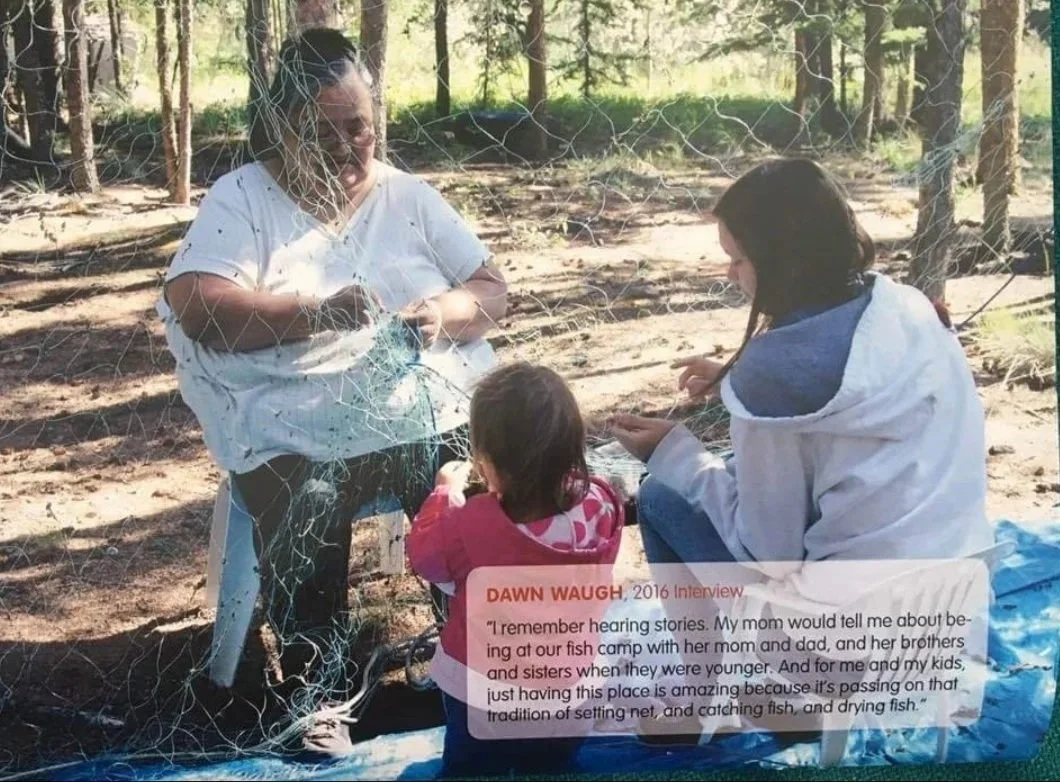
About six months ago, I was contacted by CBC, asking if I wanted to expand my “Salmon Are in My DNA” story through the CBC Creator Network. It became a process of shaping a story that truly reflected what matters most to me: my late Grandma, salmon, and art.
I had already begun connecting these pieces during my time as an Artist in Residence at the Kwanlin Dün Cultural Centre. Through my beading, I created a piece that carries deep meaning:
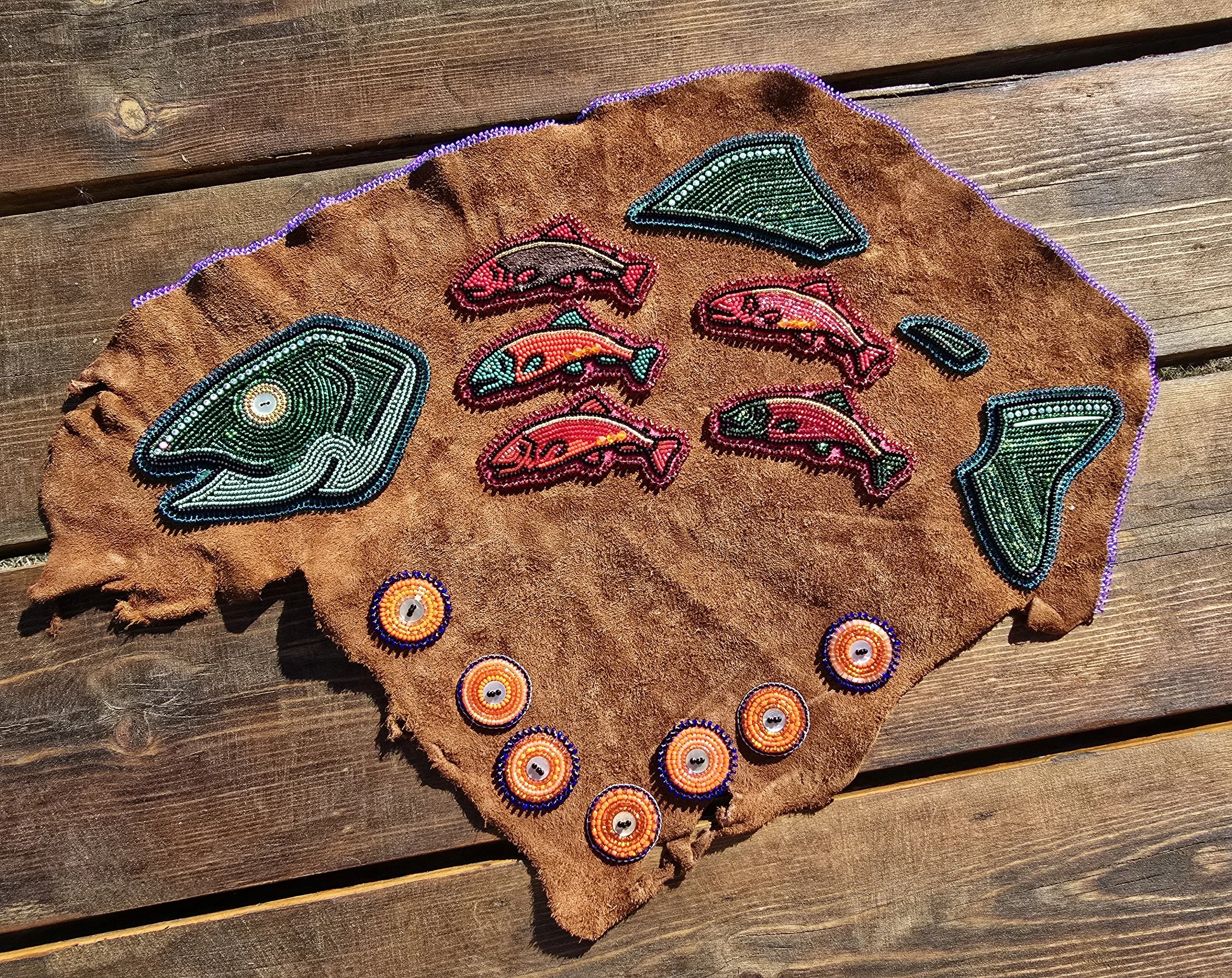
The larger salmon represents my Grandma, Lin Waugh. The smaller salmon represent her five children and the salmon eggs represent her future seven generations.
This piece holds my family, our past, and our future all in one.
When we created the video (in collaboration with Ptarmigan Creative Works, John from Dawson, CBC Creator Network, Eke Ewe Art and special appearances by friends: Leandrea Reeves, Khandi Jackson, Rowan Darnell and special shout out to Emily Ross) I chose to speak to my Grandma as if we were on the phone.
When I was younger, if we weren’t visiting her, we would call her. She always knew when I was smiling. She always had the right words. Filming those scenes brought me closer to her in a way I didn’t expect.
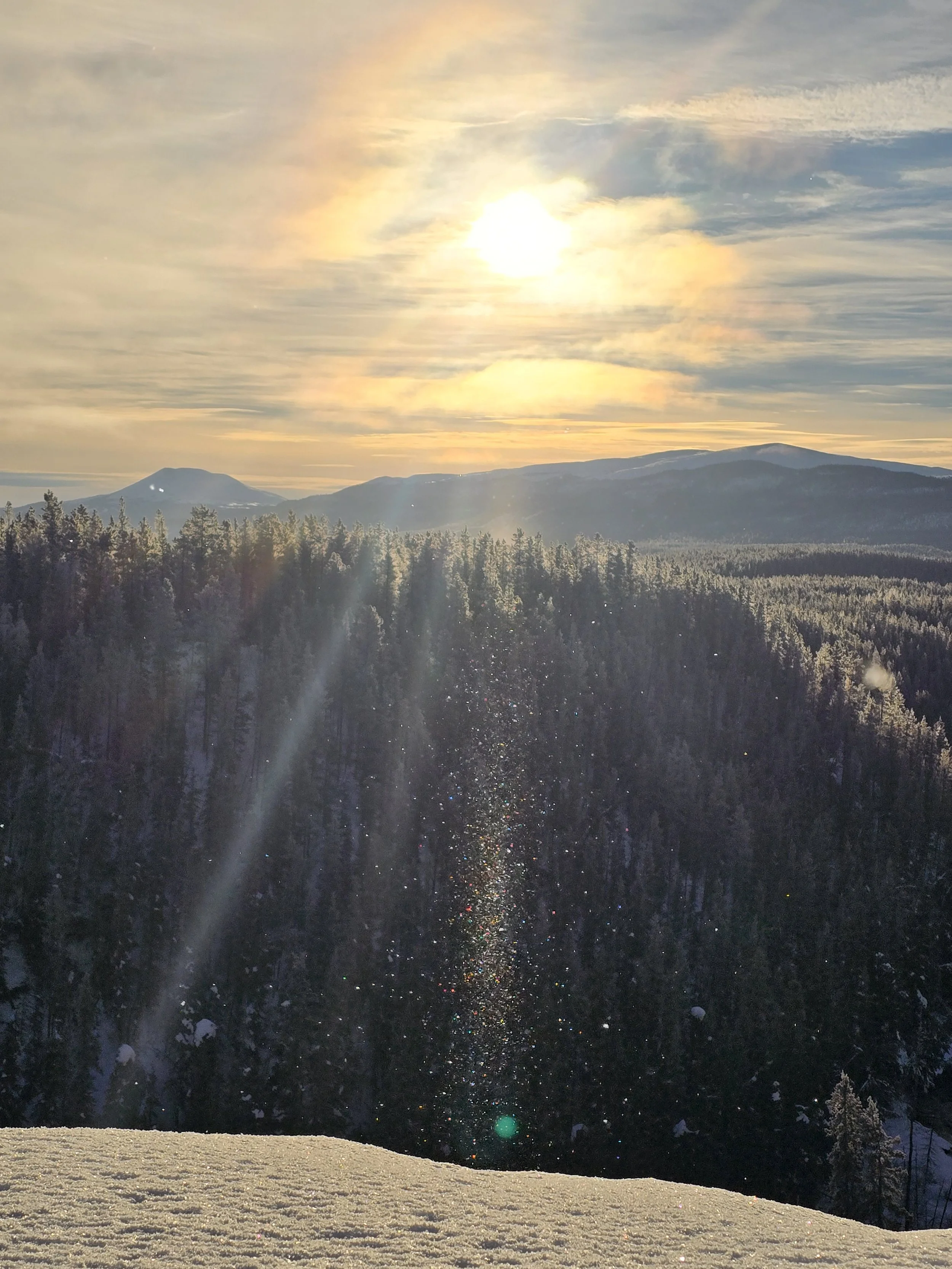
There was a moment during filming—the sun shining, snow slowly falling—and I felt it deeply. She was there. She was listening.
Through storytelling, I am healing myself.
Recently, my Dad told me that my Grandma always believed storytelling was important. That stayed with me. I grew up listening to her stories, and now I listen to my Dad’s. Storytelling keeps our memories alive. It keeps our people connected. And now, I am finding my place within that.
I am still learning. I am still healing.
Through story, through art, and through connection, I am finding my way—and I know I’m not alone.
In the Reconnection Vision, we share these teachings for this seed:
Being strong, grounded, and whole is the foundation of Indigenous ways of being. Our culture is inherently healing.
We have normalized repressing trauma and operating in survival mode in our society. We can also normalize healing and wholeness. Everything we do can be trauma-informed.
The shame and stigma around mental health and expressing emotion prevents healing. Being true and sharing our healing journey with others can support a culture of healing.
The importance of mental health is not prioritized in our daily lives, our jobs, or at school.
Academic, professional, and personal settings trigger trauma responses (i.e. fight, flight, freeze, fawn) through imposed norms such as deadlines, tests, 37.5hr work weeks, financial stress, power imbalance, mechanistic procedures and communication.
Self care is community care. When you are healthy, it transforms everyone around you.
Collective and group healing is powerful as we create safe space together, in addition to our individual healing efforts.
I’d like to leave you with this question about how this Seed connects to your own life and experience:
What does healing look like for you? And how can you make it part of your everyday life?