Restorative Justice is Reconnection: What Community, Circles, and Climate Action Have Taught Me
By Jennifer Mierau a Tr’ondek Hwech’in youth, YFN Climate Action Fellowship Alumni, RV Comms Team Member and Wholeness Facilitator
When most people hear “Restorative Justice”, they think it is only about responding to conflict or harm. The Government of Canada describes it as “an approach to justice that encourages communication between victims, offenders, and the community to address the harm caused by a crime. RJ is a safe and voluntary process that leads to healing for victims, meaningful accountability of offenders, and contributes to healthier, safer communities.”
That definition is important.
But for me, Restorative Justice means something much bigger.
It lives in the everyday moments of how we treat each other. It’s about restoring balance within ourselves, not just after harm has happened, but in the way we live, the values we carry, and the choices we make.
It’s about learning to care for one another and remembering that our actions affect the people around us. It’s about having autonomy in ourselves while also being guided by shared responsibility and respect.
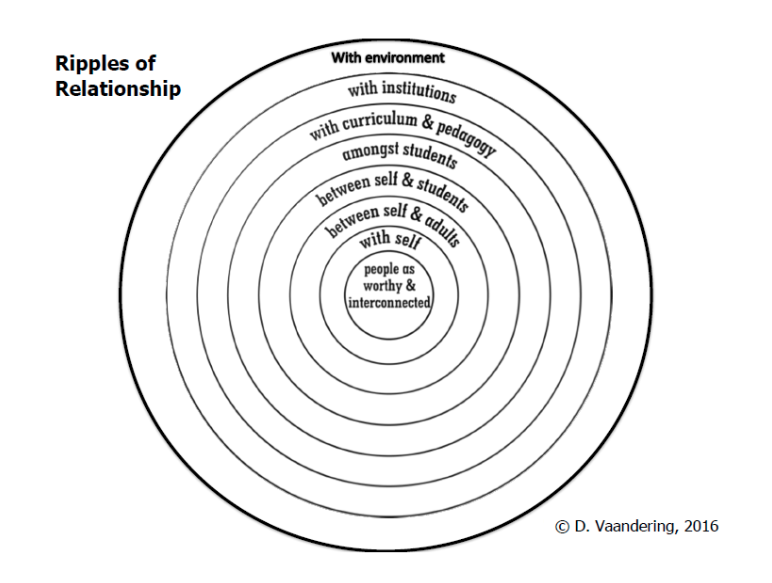
Restorative Justice, to me, is about living in good relationship.
It’s how we take care of one another. How we sit together and make decisions as a community. And how we stay connected to the land, to culture, and to each other.
Reconnection and Wholeness
Part of my journey, and why I became so interested in Restorative Justice, began when I started working in the Justice Department at Tr’ondëk Hwëch’in Self-Government as a Traditional Justice Researcher. In that role, I spoke with community members about the traditional justice practices and knowledge they remembered and carried from earlier times. Through this work, I also received training from the Yukon Territorial Government to become a Restorative Community Conference Facilitator. This training mainly supported youth justice programs and helped with cases within the Tr’ondëk Hwëch’in community.
A few years later, I felt called to return to learning more about Restorative Justice and circle facilitation through the Restorative Justice Certificate program at Simon Fraser University. I completed the program in December 2025, and it helped deepen my understanding of Restorative Justice principles and practices. It also opened my thinking to how this work connects to community projects, education systems, and the philosophy behind a restorative lens.
Although there was a lot of heavy reading, I gained a clearer understanding of the subject and was able to put the knowledge into action right away. As I connected the learning from this program with my own experiences, I noticed that many of these practices are similar to the ways we teach and learn back home.
That learning became even more grounded through my work with the Reconnection Vision, a youth-led movement rooted in Yukon First Nation worldviews.
What I’ve learned is this:
Climate action isn’t just about green policies or projects. It’s about healing, belonging, and being in good relationship. It starts with healing ourselves first — this is the first of the 10 Seeds in the Reconnection Vision.
Today, I work with Reconnection Vision as a Wholeness Facilitator. The community I work with includes youth and intergenerational members across the Yukon who care deeply about the land, water, animals, climate action, cultural revitalization, healing, and all that is interconnected. Many of us are carrying climate grief, disconnection from culture, and exhaustion from systems that don’t always listen or work together.
In this work, I’m continuing to learn and share why wholeness matters, a teaching reflected in the Medicine Wheel.
The Reconnection Vision creates space for something more human, and that goes at the pace of our environment.
Walking With Youth
Through circles, we tell stories, do ceremony, and share teaching and learning, we come together to truly hear one another. Elders share wisdom, youth speak truth, everyone matters. I don’t just lead youth, I walk with them. My role is to create spaces where young people feel safe to speak honestly, ask questions, and take up space in decisions that affect their lives. I help facilitate circles, co-lead retreats, and support the development of resources that help this work grow. The values I try to live by are accountability, cultural integrity, wholeness, and collective care. These values show up in how we treat each other, especially when things feel uncomfortable and uncertain.
At its core, Restorative Justice is about dignity.
It’s about creating spaces where people are respected, heard, and valued, not judged or rushed. Some practices we use in Circles are storytelling and ceremony, they help us move away from spaces that focus only on outcomes and toward communities that care about each other.
One teaching that guides me is leading with curiosity instead of control.
I don’t come into circles with all the answers. I ask questions, listen deeply, and trust the wisdom already in the room. That’s how trust grows. The seeds we plant today lay the foundation for stronger, healthier communities tomorrow.
How Circles and Ceremony Guide Us
Circles aren’t just a tool, they’re our way of being together. Our team creates intentional spaces with ceremony and check-ins that help people arrive fully, mentally, physically, emotionally, and spiritually. As a Wholeness Facilitator, I lead monthly new moon gatherings called “Wholeness Wednesdays”, inspired by natural cycles of renewal and setting intentions. These gatherings remind us that healing doesn’t have to be rushed and that the land and sky can guide us forward. They give us time to be together, to be well, and make space for wholeness.Restorative work isn’t always easily measured.
Instead of just tracking numbers or writing reports, we ask: “Did people feel safe? Were they heard? Were they respected? Was it the right time?” We learn through listening, honest conversations, and being willing to take accountability when harm does happen. With a foundation of respect, we see that our relationships matter more than the work that follows.
Reconnection Is Climate Action
When we created the Reconnection Vision, we realized that much of the language around “climate action” focuses on sustainability, reducing carbon footprints, and project funding longevity. It's about sustaining our relationships, teachings, and values. Ceremony, Elders’ guidance, and youth leadership keep this work grounded. Power and decisions are shared collectively, which creates energy, momentum, and resilience over time.
At the heart of this work, it’s about reconnection to land, culture, community, and ourselves.
Restorative justice has shown me that healing and climate action are deeply connected. When people feel like they belong, they’re more willing to care for the land, with each other, and for future generations.
Reconnection isn’t just a concept. It’s a practice where our youth are leading the way.
I invite you to join in a community event, and share your story, learn from Elders, or create a space where people feel safe, respected, and valued. Every small act of connection helps build stronger communities and a healthier planet.
The seeds we plant today grow into the relationships, teachings, and change for the Children of Tomorrow.
With every step, take up space, use your voice and be part of the movement. Youth are leading the way, and so can you.